How Much Does It Cost to Build A Real Estate App Like Trulia or Zillow?
20 June 2026 | By Sowmiya |
Mobile Application Development | 872 views
Back in the early 2010, buying or selling property was a challenging process. Property owners had to rely heavily on agents to inspect, list, and connect with potential buyers. However, with advancements in technology, homeowners can now list their properties directly through apps, connect with interested buyers or renters, and even offer virtual tours of the property.
Are you considering building a real estate platform comparable to industry leaders like Trulia and Zillow? Before jumping into development, it’s important to understand the estimated cost, how these apps function, and the key factors that influence pricing.
The cost to build a real estate app like Trulia or Zillow typically ranges from $10,000 to $50,000, depending on the features, platform ( iOS / Android ), and level of complexity involved.
To help you plan better, we’ve outlined the main factors that can impact the overall development cost—such as design, tech stack, user roles, integrations, and monetization strategies.
How Does Zillow’s Business Model Work?
Zillow is an online real estate marketplace in the United States that connects home buyers, sellers, renters, and real estate professionals in one place. The platform empowers users to buy, sell, rent, and list properties based on their preferences, budget, and location.
Users can easily browse through thousands of property listings, filter results by location, price, and amenities, and connect directly with agents. Zillow stands out by offering a smooth and transparent home-search experience powered by real-time data and insights.
Zillow’s Multi-Channel Revenue Model:
Zillow generates income through multiple revenue channels, such as:
Advertising Services: Real estate agents and property managers pay Zillow to promote their listings and increase visibility among potential buyers or renters.
Premium Listing Services: Homeowners and agents can pay for enhanced listings that appear at the top of search results to get more exposure.
Lead Generation for Agents: Zillow offers a Premier Agent program where agents pay for leads and visibility in their target markets.
Mortgage Solutions: The platform connects users with lending services and earns from referrals and advertising by mortgage providers.
Data Monetization: Zillow aggregates property and user data to provide valuable insights, which are sold to investors, developers, and financial institutions.
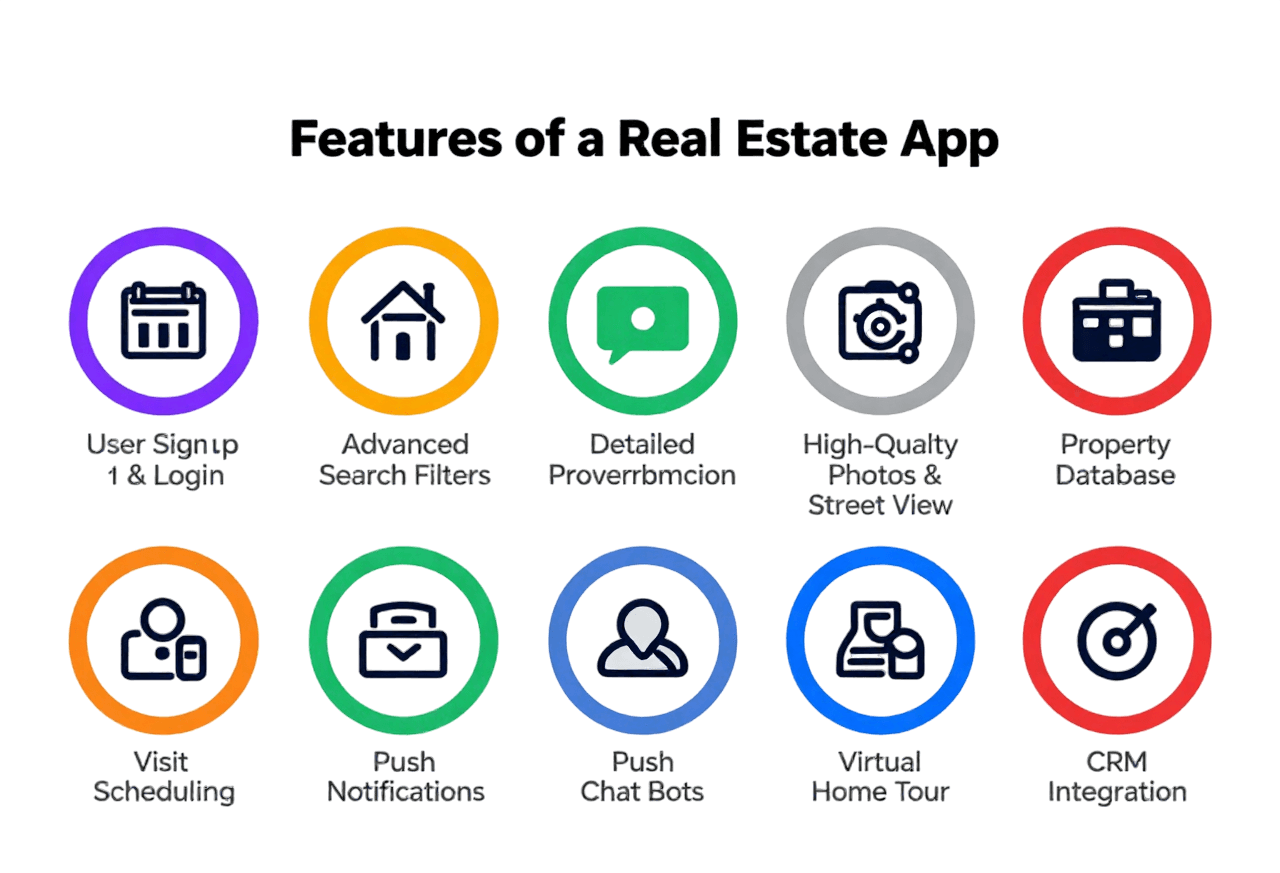
Main key features of a Real Estate App like Zillow
User Sign up & Login
User onboarding should be simple and secure. Allow users to sign up using email, phone number, or social accounts like Google and Facebook. Integrate two-factor authentication for added security. Streamlined login processes contribute to higher user confidence and increased engagement rates.
Advanced Search Filters
Users should be able to search properties easily based on key criteria like price, location, property type, size, and amenities. Advanced filters help users quickly find what they’re looking for and reduce frustration.
Detailed Property Information
Each property listing must include complete details—description, photos, videos, price, number of bedrooms and bathrooms, year built, and nearby landmarks. The more transparent and detailed the listing, the higher the chances of user interest and lead conversion.
High-Quality Photos & Street View
Include high-resolution images, 360-degree virtual tours, and video walkthroughs of properties. Integrating Google Street View can give users a realistic view of the property’s surroundings, improving trust and decision-making.
Property Database
Behind every successful real estate app is a robust database. Your app should store a large volume of accurate property data, synced with local listings. Consider partnering with real estate agents and agencies to keep your database updated and reliable.
Visit Schedulling
Allow users to schedule property visits directly within the app. Integrate with agents’ calendars to show available time slots. This feature simplifies the property viewing process and enhances user experience.
Map Integration
Enable users to view properties on an interactive map. With location-based search, they can find properties near schools, hospitals, banks, and metro stations. Maps make it easier for users to choose the right location based on their lifestyle needs.
Push Notifications
Stay connected with users through timely alerts about new listings, price drops, scheduled visits, and more. Personalized push notifications help improve retention and encourage repeat visits to the app.
Chat Bots
Enable live chat or AI-powered chatbots to assist users in real-time. Whether they have questions about a listing or need help booking a visit, instant support increases user satisfaction and trust.
Virtual Home Tour
Virtual property tours are becoming important in real estate applications. They allow users to explore properties remotely through immersive technology—especially helpful for long-distance buyers or busy professionals.
CRM Integration
A good real estate app should be connected with a CRM system. This allows businesses to manage leads, track user behavior, send personalized messages, and analyze performance. CRM also supports targeted promotions and improves sales efficiency.
Key factors affecting Developing Cost of a Real Estate App
The cost of building a real estate app involves many factors that directly impact the overall budget. These factors are crucial for businesses to evaluate in order to plan and allocate their resources efficiently. This post breaks down the essential components that impact the budget for creating property search apps like those offered by Zillow or Trulia.
1. Platform Choices
Platform selection significantly impacts the overall budget for mobile application development. Depending on your target audiences you can choose the app platform. If you are looking for a less cost app development choice then go for cross platform. Because developing separate native apps for iOS and Android can significantly increase expenses—especially Android development, which can be costlier due to the need to support a wide range of devices and OS versions.
To reduce real estate app development costs and timelines, businesses can opt for cross-platform technologies like React Native development or Flutter.
2. UI/UX Design
User satisfaction and engagement in mobile applications are largely determined by the quality of UI/UX design.
3. Features & Functionalities
If you’re planning to build a basic real estate app with standard features such as property listings, search filters, map integration, and contact forms, the development cost will remain relatively low.
4. App Development
This includes both front-end and back-end development.
5. Third-party integration
API enables the connectivity between the apps and the shared data.
6. Testing and Maintenance
Developing a real estate mobile app goes beyond just coding.
Real Estate App Development Cost Breakdown
The cost to develop a real estate app typically ranges from $10,000 to $50,000+.
App Complexity
Features
Estimated Cost
Basic
Simple UI/UX, listings
$10,000 – $20,000
Medium
Filters, maps
$20,000 – $30,000
Advanced
AI, chatbot
$30,000 – $50,000+
Build your Real Estate App With Authorselvi
The above-mentioned are some of the key factors that influence real estate app development costs.
If you’re planning to build a real estate mobile app, partnering with a reliable and experienced app development company is crucial. Authorselvi is a leading mobile app development company in India.
Whether you’re launching a new platform or modernizing an existing one, we help you bring your real estate app idea to life — on time and within budget.
So
Sowmiya
Content Author
I’m Sowmiya, a seasoned content writer and digital marketer, responsible for enhancing customer engagement and digital presence. I love to write crafting captivating blog content and implementing effective marketing strategies to connect with audiences. Also I have experience in managing social media, email campaigns, driving organic traffic etc. I enable businesses to adapt, innovate, and attain long-lasting success in the digital era.